

New to facials, or not sure they do anything a good home routine can't? A professional facial deep-cleanses, gently resurfaces, and rehydrates your skin in a single session — and, done well, it does as much for how you feel as for how you look. Below, we walk through what actually happens on the table at Perfect Head Spa in Woodbridge, why your skin feels different when you leave, and how to get the most from a treatment.
More Than a Wash: What a Facial Actually Involves
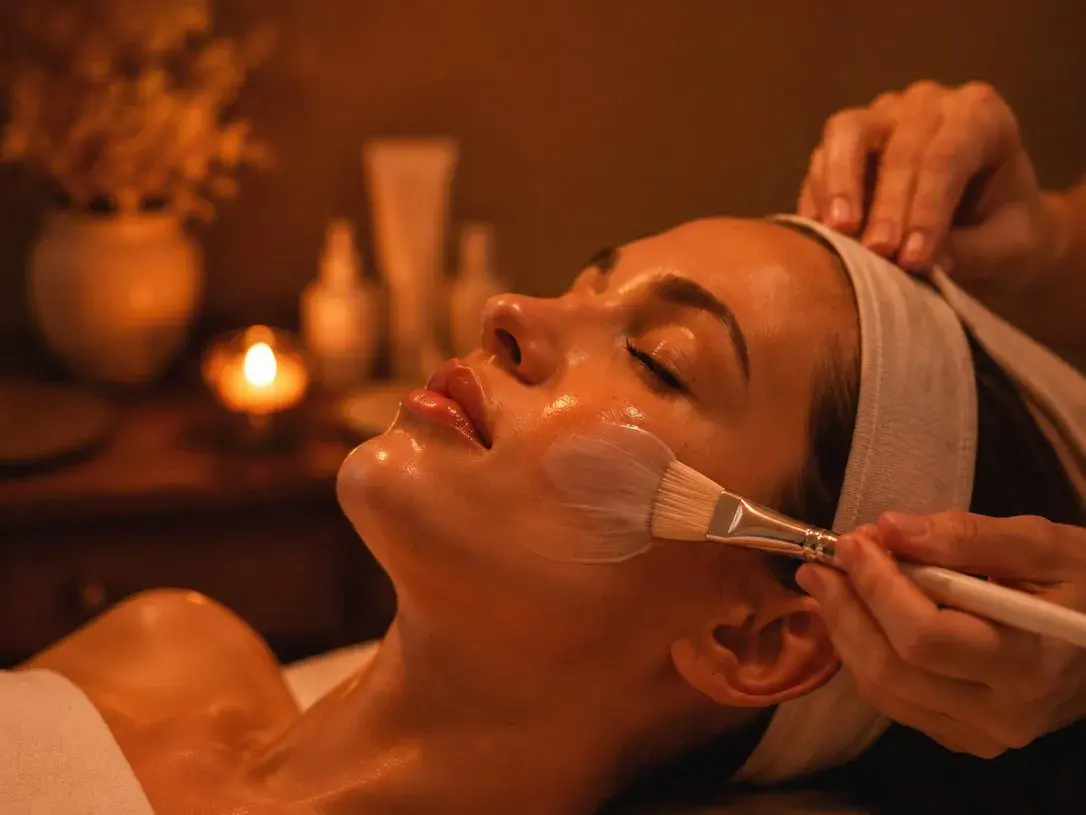
A facial is a sequence, not a single step. It usually opens with a double cleanse to lift away makeup, sunscreen, and the day's residue, followed by gentle exfoliation to clear the dull, dead cells that make skin look tired. Warm steam softens the skin so pores can be cleared properly. From there your esthetician reads your skin and adjusts — a hydrating mask for tightness, a clarifying one for congestion, a calming one for redness — before finishing with serum, moisturiser, and sun protection.
The difference is in the reading. A home routine treats every day the same. A professional treats the skin in front of them today, which is why the same person can leave two facials feeling like they had two different treatments. Skin changes with the season, your sleep, your stress, and what you have been eating — a good facial meets it where it is.
A Deeper Clean Than Your Bathroom Can Manage
Even with careful washing, skin collects buildup over time — oil, product, and environmental grime that settle into pores. Professional-grade cleansers and steam soften that buildup so it can be cleared, and any extractions are done with trained hands and proper technique rather than fingers in a mirror at midnight.
That matters, because at-home squeezing is how most people turn a small clogged pore into a spot that lingers for a week. A professional extraction, done sparingly and only on softened skin, clears congestion without the bruising, scarring, or aftermath. If your skin tends to break out along the same few areas, this is often the single step that makes the biggest difference.
The Relaxation Isn't a Side Effect — It's Half the Treatment
Ask anyone who has had a proper facial what they remember, and it usually isn't the mask — it's the massage. The facial massage that runs through the treatment does real work: it eases the tension we hold in the jaw and brow, encourages the lymphatic drainage that can leave a face looking less puffy, and brings a flush of circulation that gives skin its post-facial glow.
There's a quieter benefit, too. Stress shows up on skin — in breakouts, in dullness, in flare-ups that arrive at the worst possible time. Forty-five unhurried minutes where nothing is asked of you is not an indulgence tacked onto the end of the treatment; it is part of why your skin looks calmer afterwards, and part of why so many people leave a facial feeling lighter than they walked in.
Facial and Head Spa: A Natural Pairing
This is where a head spa changes the conversation. The skin on your face doesn't stop at your hairline — it continues up over your scalp as one connected surface, and the tension in your forehead is the same tension that tightens your temples and the back of your head.
So pairing a facial with a head spa treatment isn't two unrelated services stacked together. A head spa releases the scalp and neck tension a facial alone can't reach, while the facial cares for the skin your scalp flows into. Many of our guests find the combination leaves them feeling looked after in a way a single treatment doesn't — the face bright and hydrated, the head genuinely unwound. If you have never tried the two together, it is the treatment we most often hear people wish they had booked sooner.
Who a Facial Helps
Almost everyone, but for different reasons. If your skin feels congested or looks dull, a facial resets it. If it feels tight, dehydrated, or reactive after a change of season, a facial rebalances it. And if you simply carry your stress in your face — a clenched jaw, a permanently furrowed brow — a facial is one of the few things that meets that head-on.
It is not a medical treatment, and we will always be honest about what a facial can and cannot do. What it reliably delivers is cleaner, calmer, better-hydrated skin and an hour that genuinely resets you.
How Often Should You Book One?
A common rule of thumb is roughly once a month, which tracks with your skin's natural renewal cycle — but the honest answer is that it depends on your skin and your goals. Congested or oily skin often benefits from a more regular rhythm at first; calmer, well-behaved skin may be happy with a seasonal reset four times a year. During your visit we will suggest a cadence that fits your skin rather than a package you don't need.
What to Expect at Your First Visit
Your first facial with us begins with a short conversation about your skin — what it's doing lately, what you'd like from the treatment, anything it reacts to. From there you settle in, and the treatment unfolds at an unhurried pace: cleanse, exfoliate, treat, massage, hydrate, protect. Afterwards, a light aftercare note helps it last — keep the skin simple for a day, wear sunscreen, and skip strong actives for twenty-four hours. You leave with skin that feels clean and comfortable and a clear, no-pressure sense of what would keep it that way between visits.
If you've been curious about a facial, autumn is a kind time to start — the change of season is exactly when skin tends to need a little extra care.
Book your facial at Perfect Head Spa in Woodbridge — or ask us about pairing it with a head spa treatment for the full reset.